The Iron Bridge of Gornal
Posted: | Tags: transport status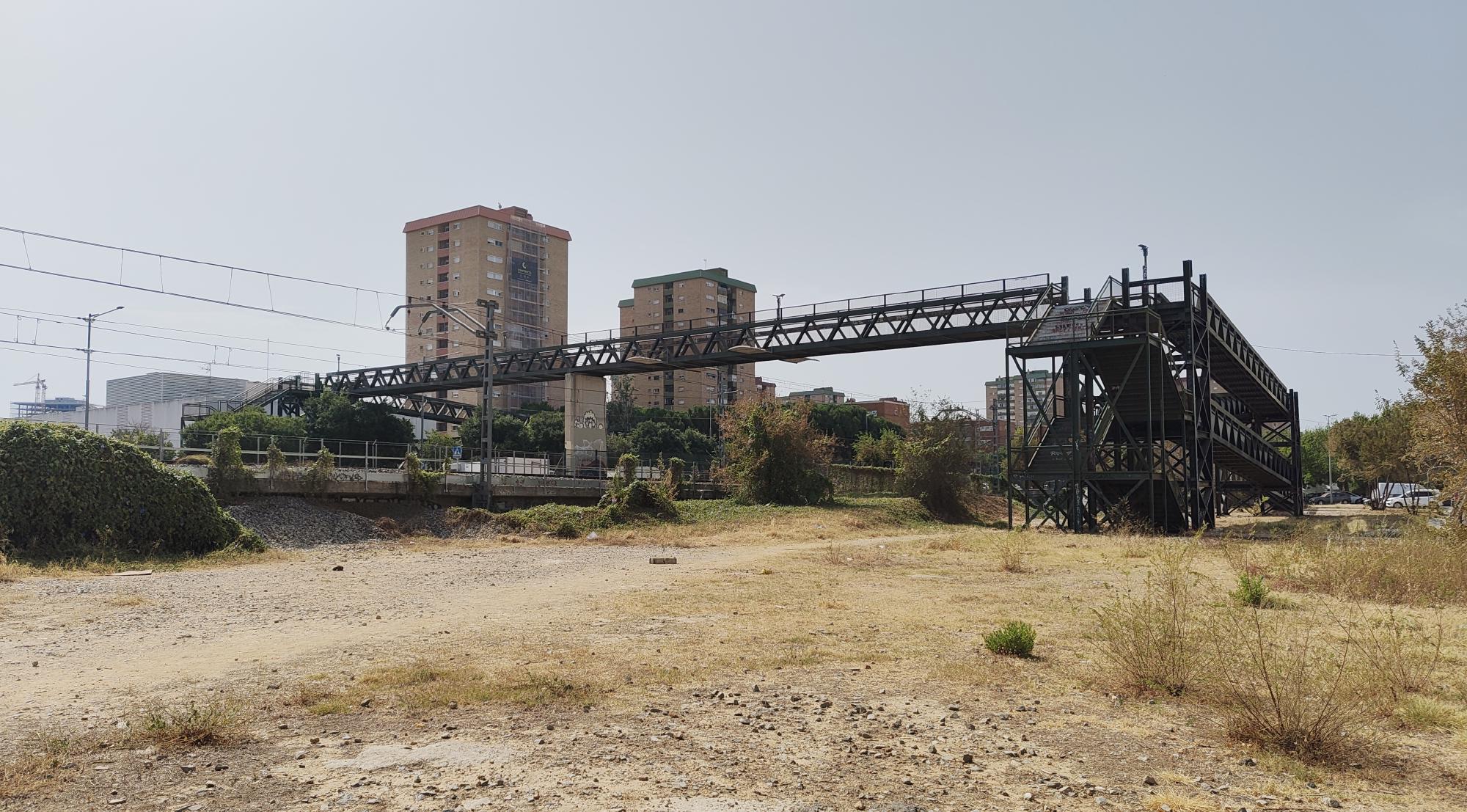
Barcelona has a good mix of public transport modes, however, as a trainspotter one grip I have is that most of the stations and tracks in the city itself are tucked away underground. This reduces the number of trainspotting locations to just the stops themselves (requiring a valid ticket), and also means I need to account for low light if I want to take any pictures or videos. Most underground stations are also somewhat tight with narrower platforms, compared to what their overground counterparts would be.
However, outside the city the trains, and sometimes metros, resurface. In April, I was at one of these locations. The Bellvitge-Gornal railway station is located in the city of L’Hospitalet de Llobregat which is southwest of the city of Barcelona. The station straddles the line between the Bellvitge and Gornal neighbourhoods, hence the name. It’s also located next to an underground FGC metro stop on the Gornal side.
At the railway station you will be able to see trains on the R2 line (including R2Nord and R2Sud) which goes from St.Vicenç de Calders to Maçanet-Massanes on its longest route, always passing through Barcelona. The line is served by the Serie 450/451 trains built by Alstom and CAF between the 80s and 90s, and the Serie 465 built in the 2000s by CAF and Siemens which are slowly replacing the older sets. Usually trains on the R15 line also pass through the station but the service was disrupted because of construction further down the route. The R15 service typically goes from Estació de França in Barcelona to Reus in Tarragona, when it’s running you’ll find the Serie 449 trains used here which are built by CAF and were put in service in 2008.
With a valid tricket I could film from the station platform itself, but I decided to look around for some other interesting spots. There’s alot of pedestrian bridges over the track including right over the platforms. However, these don’t give a clear view of the trains because of the wire mesh. I was able to film one video of two coupled Serie 465’s by standing on the ramp beside the bridge. The train was on the R2 Nord service and destined for the Barcelona-El Prat airport at Terminal 2, the final stop on its route.
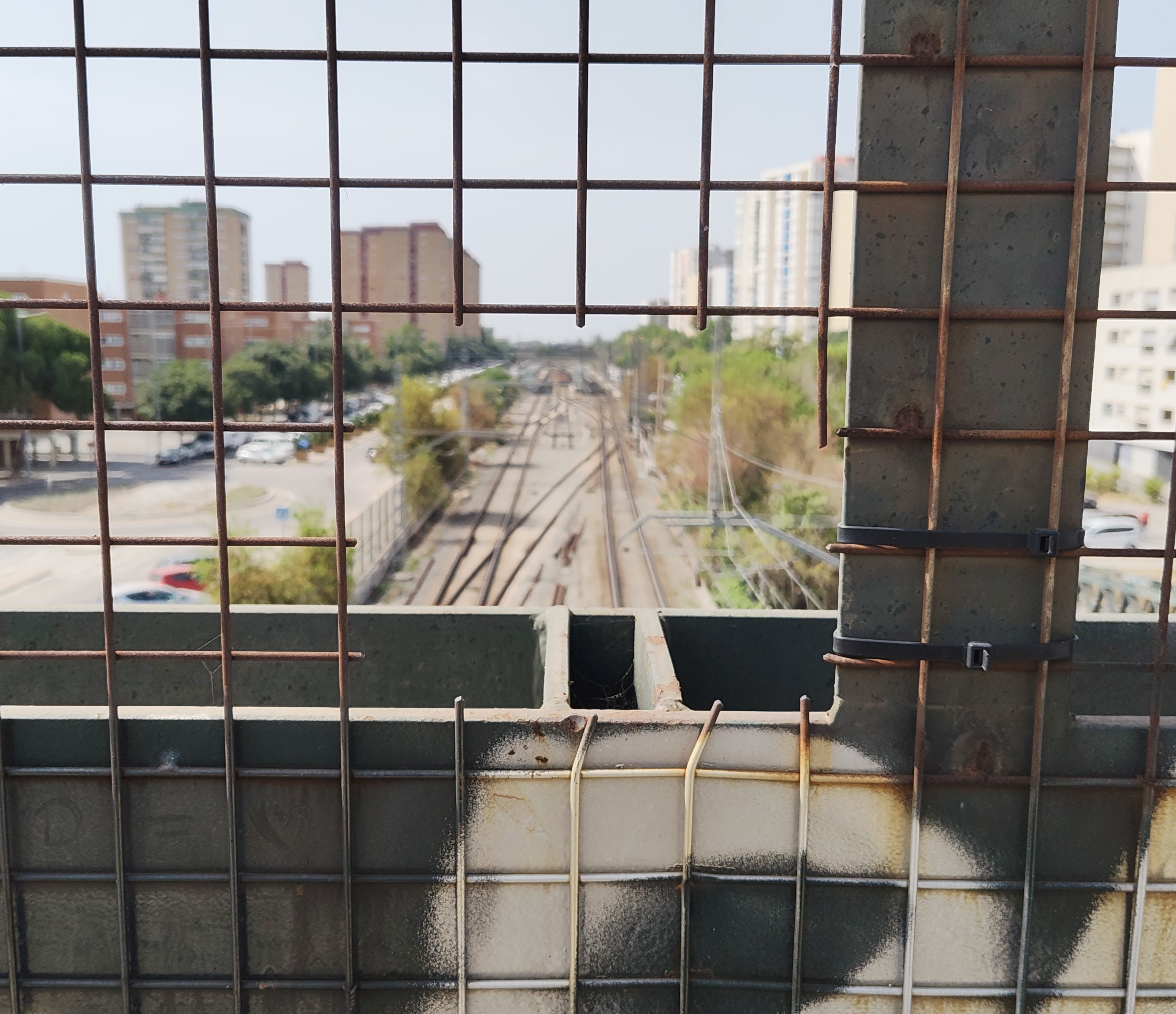
Convenient cut in the mesh.
The station has two other bridges, one to the north and the other to the south. I decided to walk to the northern bridge, this too had mesh on the sections that went over the track, but, there were small cuts which allowed me to conveniently stick my lens through and record some videos. I couldn’t find any name associated with the bridge on OpenStreetMaps, and Google Maps just calls it “Puente de Hierro del Gornal” which translates to, “Iron Bridge of Gornal”.
This bridge had a lot less people walking over it, provided a good view of the station towards the south and the tracks that bend towards Barcelona-Sants towards the north. Right when I got there I was able to record another coupled Serie 465 train, this time departing in the opposite direction on the R2 service ending at Sant Celoni.
A few minutes later looking north, I was able to film the Serie 450 on the R2 Sud service destined for Garraf. At the same time another coupled Serie 465 passee — also on the R2 Sud service, but in the opposite direction - headed towards Barcelona — Estació França via Sants and Passeig de Gràcia.
While writing this I realized I never took a picture of the bridge itself, so I went back three months later and took the picture you see at the top of this post. I quit pleased I did too because the R15 service was running, at least partially, and I got to film a Serie 449 train pass on route to Reus.
On my way down the bridge I decided to stop and wait by the top set of stairs to see if I could catch another train. This turned out to be a good filming spot as well! I managed to record a Serie 465 and Serie 449 pass in opposite directions. I haven’t uploaded the video yet, but will update this post when I do.
This short post was inspired by @takeshis_yok’s writing on their blog which is accompanied by some very nice pictures of rail vehicles. The text is usually minimal and the focus of the post are the pictures themselves. Occasionaly when I get a chance to go on a trainspotting excursion I record videos that get uploaded individually to YouTube. They usually have some context in the description, but I figured I could talk about those videos collectively in a post like this one. I’ve already experimented with this in the past when I wrote about the Keverdijk crossing and this would my second go at it.