Jardines de la Rambla de Sants
Posted: | Tags: transport statusThe Jardines de la Rambla de Sants starts at Plaça de Sants and goes roughly 760 metres south-west over the Mercat Nou and Santa Eulàlia metro stations. Unlike most metro stations here in Barcelona, Mercat Nou and Santa Eulàlia aren’t undergoround which means the park is actually elevated. Beside the metro line is also the Rodalies train tracks carrying commuters on the R1, R2, R3, R4, R13, R15 and R16 services. Essentailly any train starting at Barcelona and headed towards the Bellvitge-Gornal or L’Hospitalet de Llobregat stations that are not high-speed will pass these tracks.
The park ends when it reaches the border between the municipality of L’Hospiatlet de Llobregat and Barcelona, this allows us a nice view of the both the train tracks and a bit of the metro before it goes into the Santa Eulàlia metro station. The tracks that divide the city aren’t always seen as something pleasant, in fact this park was built to hide the tracks. Take this quote from elPeriodico covering the opening of the park in August 2016:
Lo que se divisa desde ese balcón, pues, es la difícil convivencia de las vías y los edificios residenciales, una cicatriz abierta como la que ha sometido a cirugía estética Barcelona.
It describes the tracks, as seen from the view point at the end of the park, as an open scar which Barcelona has tried to cover up. Nevertheless, to this open scar I go, excited to film the trains. As I’ve said before, there isn’t a whole lot of opportunities to film the trains overground in Barcelona, so I’ll take every opportunity I get.
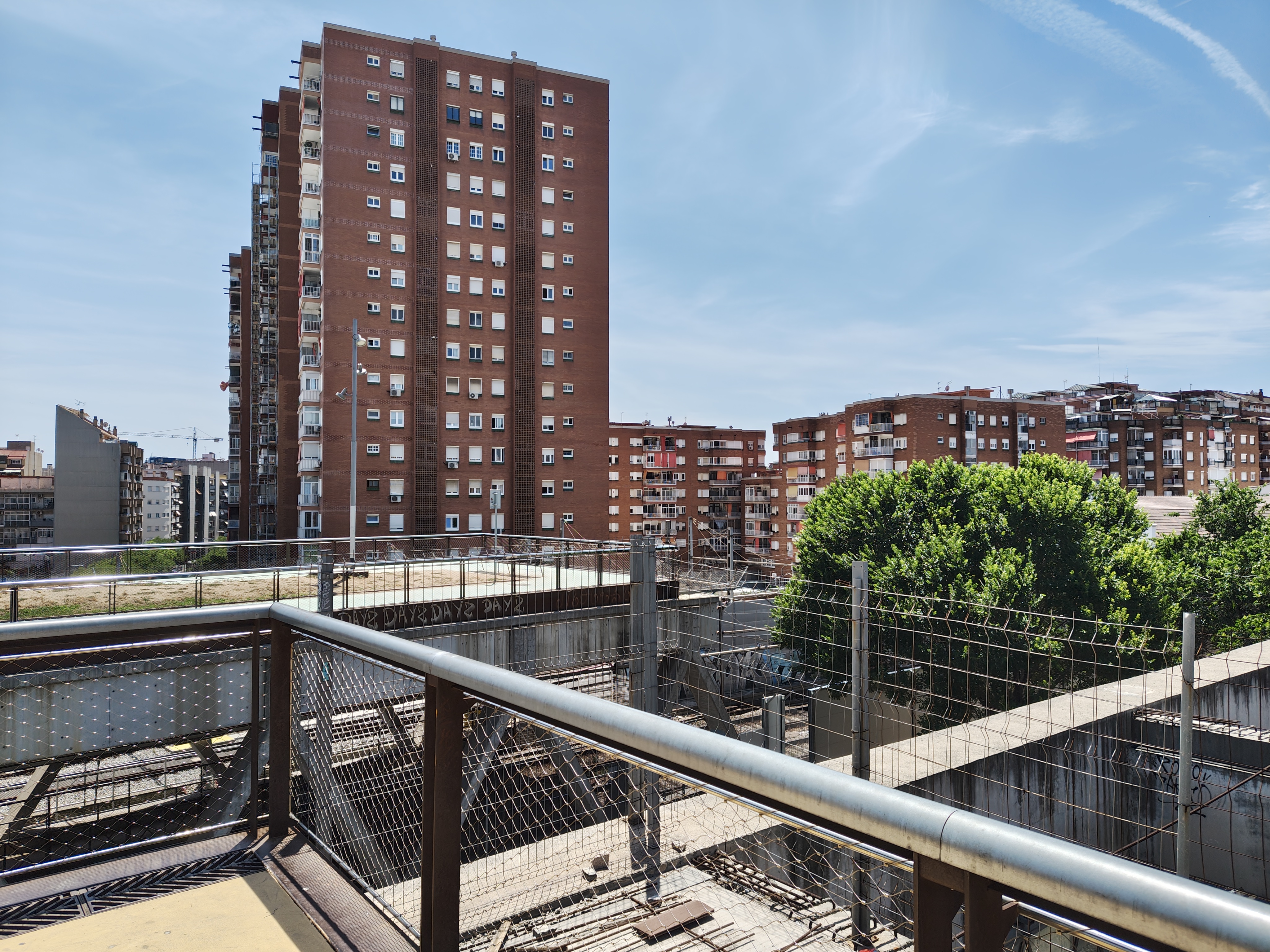
I took this photo of the left fork while standing on the right fork filming trains.
It was April when I first discovered this place and I had just enough time to film a Serie 8000 metro leave Santa Eulàlia while I was around. Over the next few months I managed to watch some more metros and trains from the view point.
The park is accessible throughout the 760-or-so metres by escalators, ramps and elevators. But, if you want to go directly to the viewpoint, like I did, you can take the L1 metro to Santa Eulàlia and exit towards Carrer de la Riera Blanca. From there you can climb the stairs or take the elevator up to the balcony.
The park forks at this point. On the left you can see the L1 metro and depot. The depot is accessible to the metro trains from track 1. They pass Santa Eulàlia, stopping just short of Mercat Nou, and reverse in. I saw this happen on an early morning trip I did when the L1 first opened after being shut between Plaça de Sants and Florida for renovations over the summer. I wasn’t in position to film at the time, unfortunately.

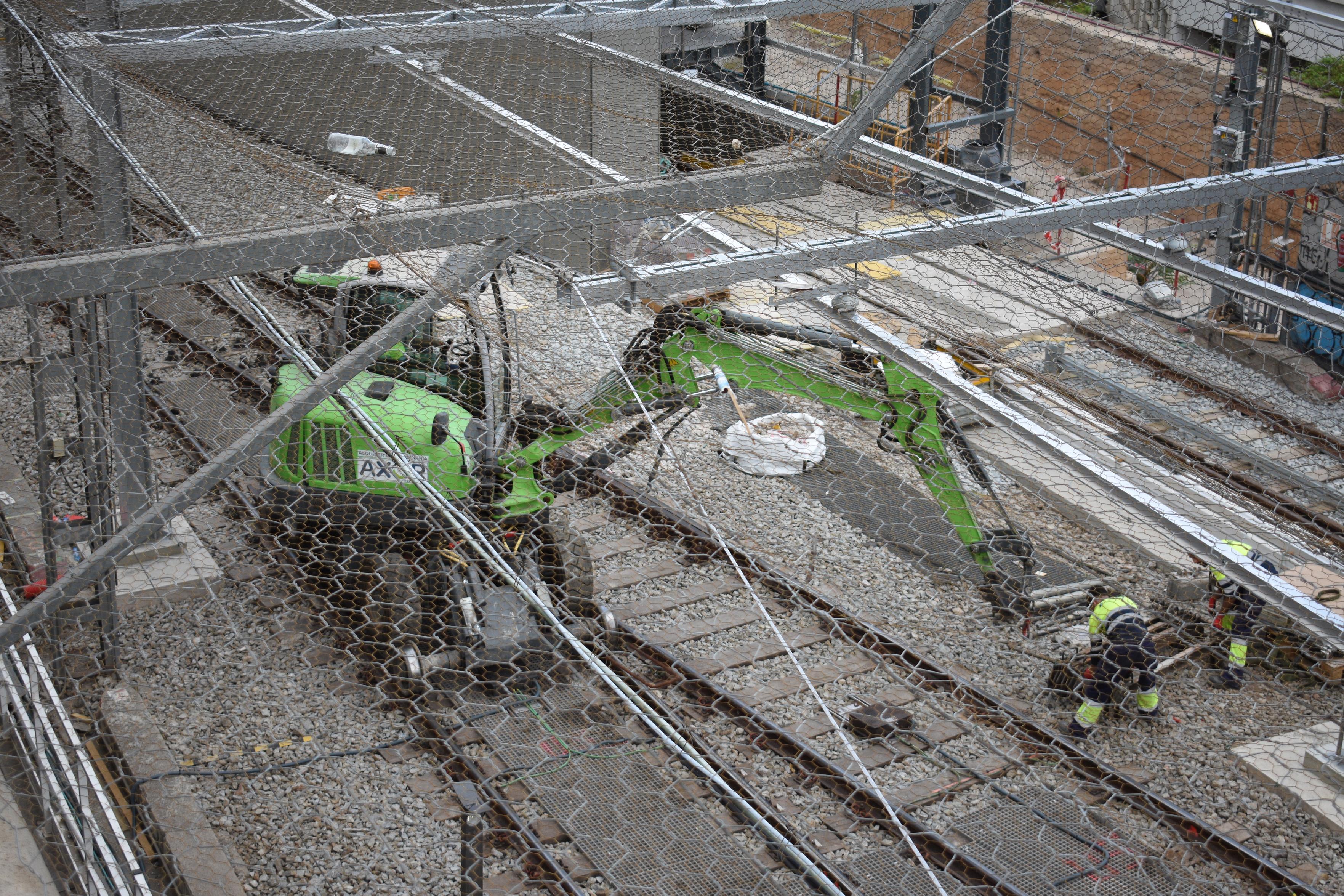
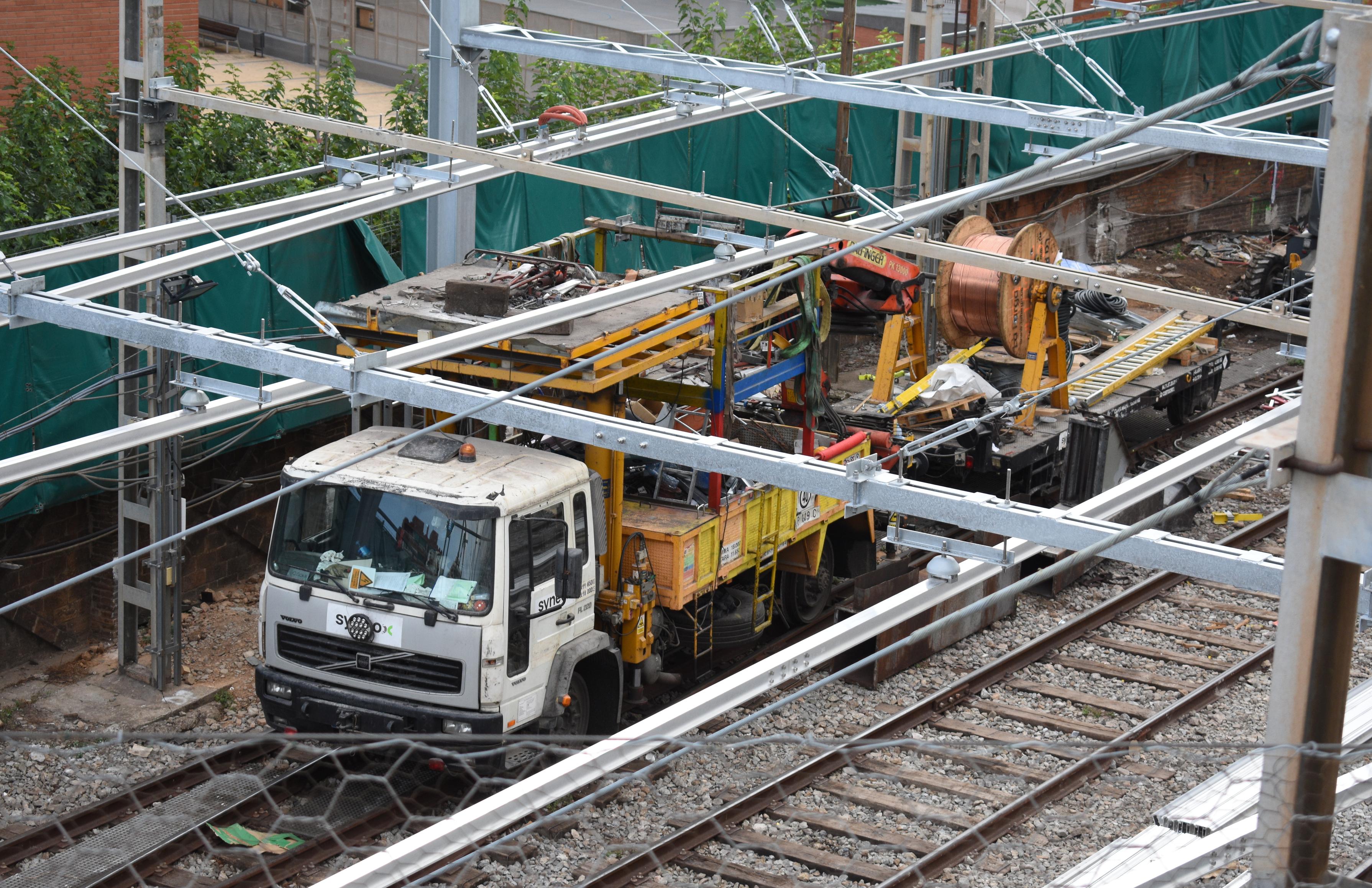
On the right fork of the park you can see the four train tracks used by Rodalies de Catalunya. These can get busy at times as it covers every comutter train leaving and entering Barcelona from the south. Take this two and half minute video, for instance, where I was able to film four trains passing. The first two trains are Serie 447 trains on the R4 service, headed in opposite directions. The next two are Serie 465 and 449, on the R2 Nord and R16 service respecitvely.
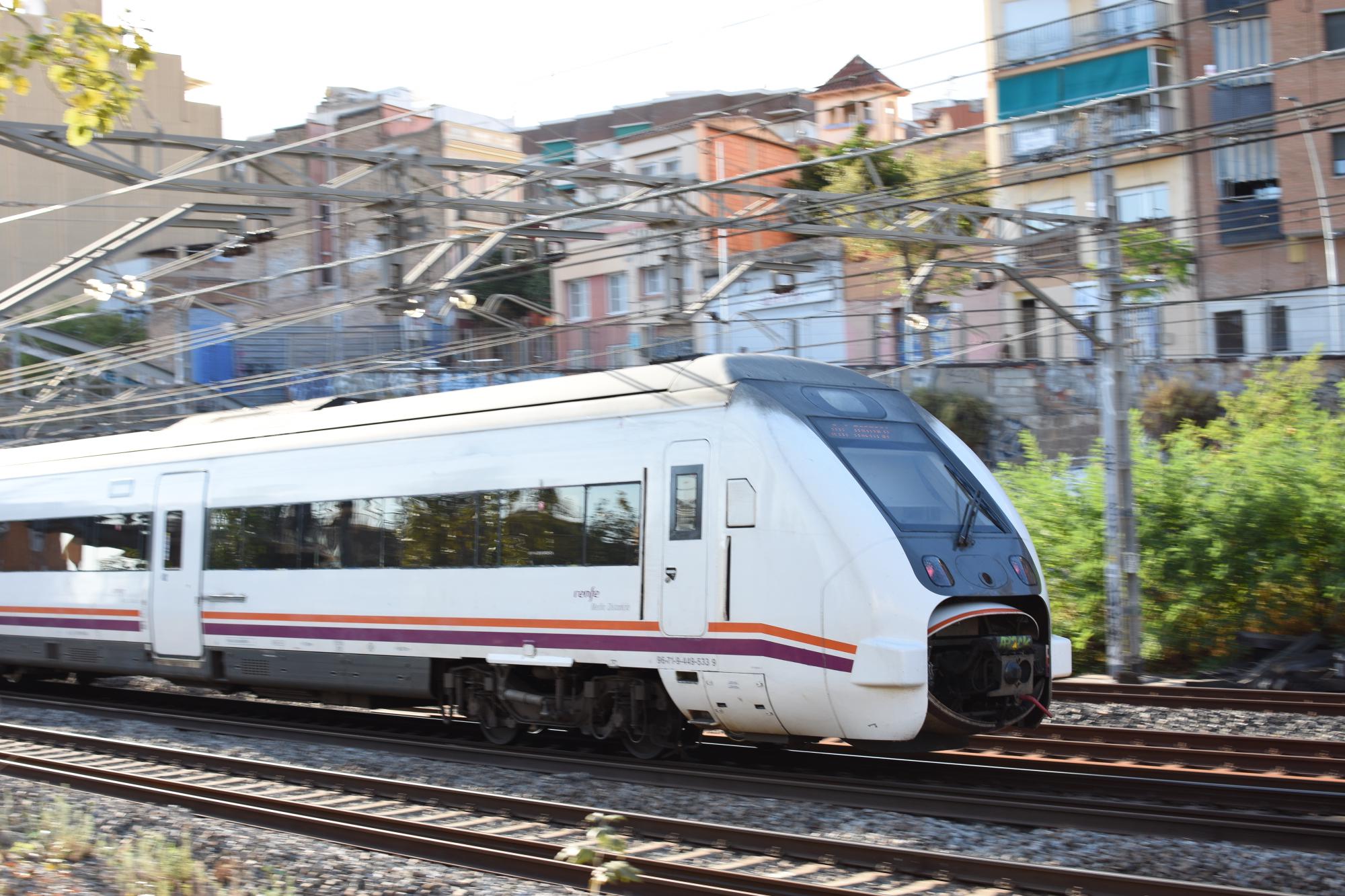
If you exit the Santa Eulàlia metro station on the oppsite side of the park you can still get a view of the train tracks from the pedestrian bridge, El Puente de la Torrassa, or between the ramp leading up to the pedestrian bridge and the metro station, like I did when I took this picture. You do have to lean against the railing to get a good view but it’s probably the closest I could get to the the trains from any view point in Barcelona without actually being underground at a platform.
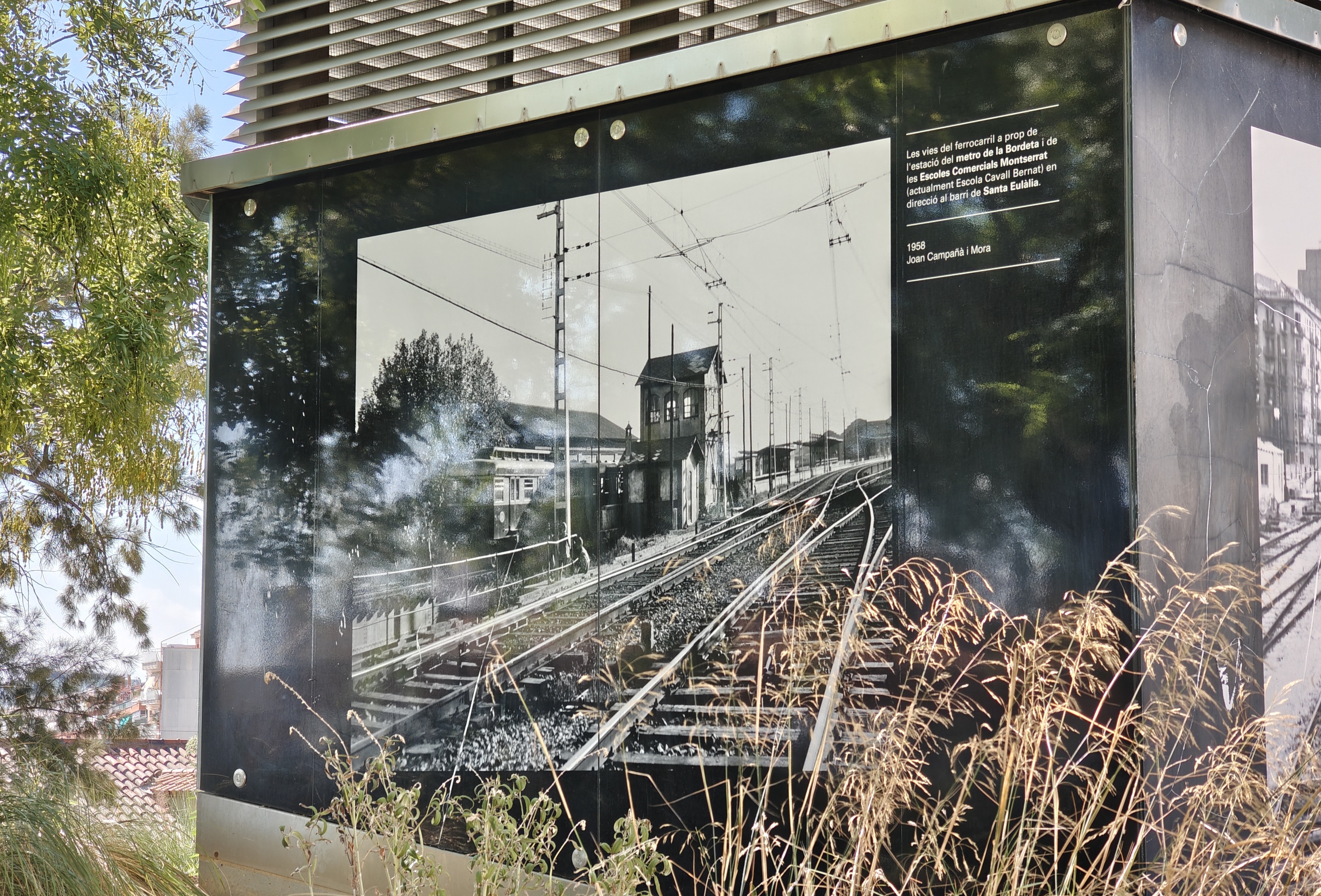
The railway tracks near the Bordeta metro station and the Montserrat Commercial School (Cavall Bernat School today) heading towards the Santa Eulàlia neighbourhood. 1958, Joan Campañà i Mora.
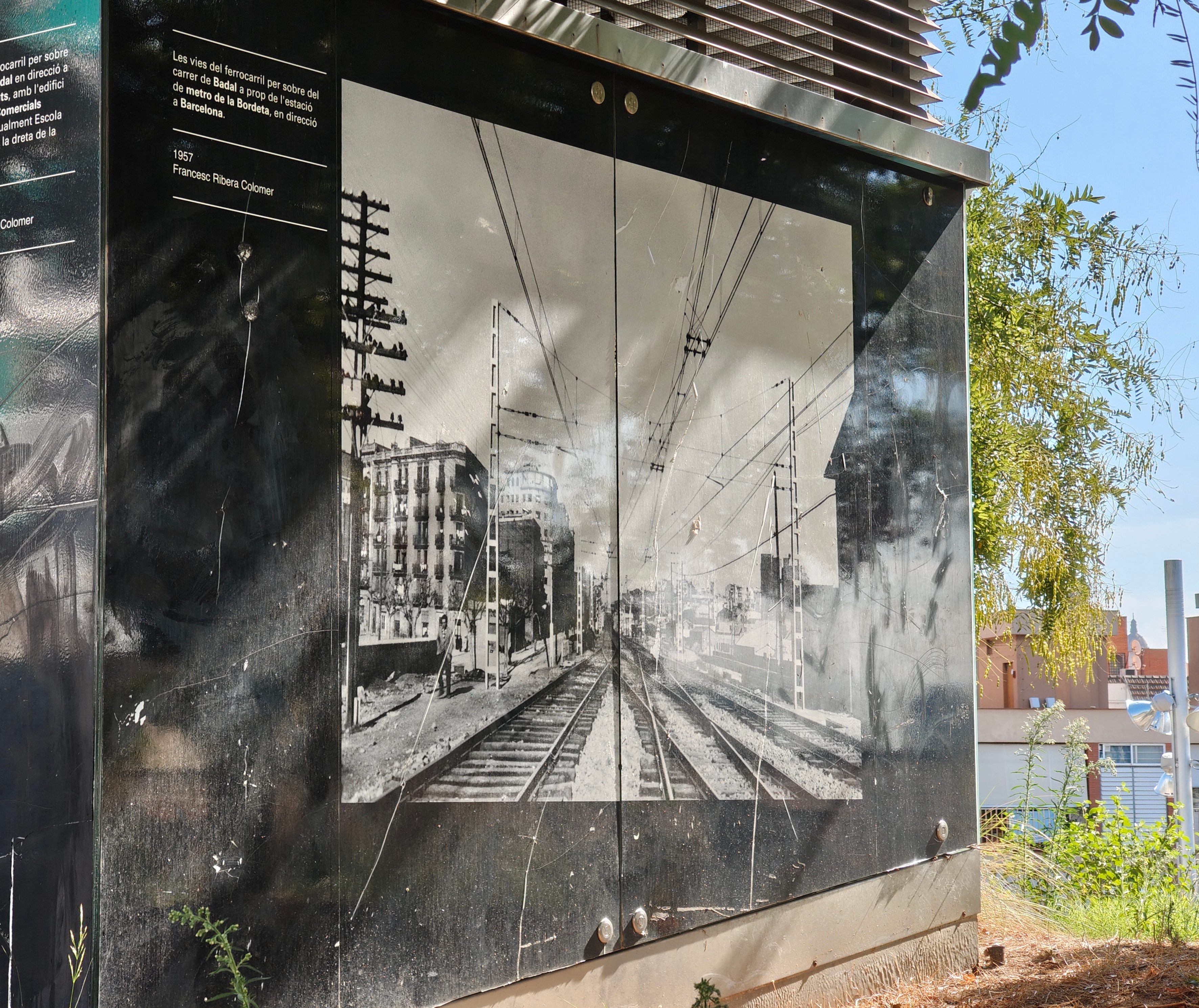
The railway tracks above Badal street near the Bordeta metro station, heading towards Barcelona. 1957, Francesc Ribera Colomer.
I cannot talk about this area of Barcelona and not mention Bordeta. This metro station was opened in 1926 and used on the Transversal Metro line from Catalunya. This line now makes up the part of the modern L1. It was closed in 1983 as it was too close to the Santa Eulàlia station to be useful. The last remains of the station were demolished when building the park and nothing of the original station remains today. As a nice touch, in the park there are pictures with text that describe this station and it’s role in Barcelona’s urban history.
This might be my new favourite train spotting location thus far.