Earlier this year, I shared how excited I was for a direct service between Amsterdam and Hamburg by GoVolta. This rail link could have also provided a hop to Denmark and the rest of Scandinavia, especially as it lined up with GoVolta’s expansion plans. Unfortunately, that didn’t last long and the service to Hamburg was cancelled only three months after starting. According to Thibault Lapers from mobilithib in an interview with GoVolta’s co-CEO, Hessel Winkelman, the route had low demand and the company faced issues with their rail operator. GoVolta instead focused their rolling stock on the more popular Amsterdam-Berlin service.
Read more...
Rail
Most trams you’ll encounter today run on electricity using an overhead contact system, or OCS for short. This usually includes one wire, called the contact wire, powered by feeder stations providing DC voltage, which is “collected” by a pantograph connected to the roof of a tram. This provides power to the tram while it’s moving or standing still.
A GVB 15G tram (CAF Urbos 100) at Amsterdam Zuid. Development of the overhead contact system first began towards the end of the 19th century as operators switched from horse-power (literally) or steam to electricity. OCS eventually made its way into mainline rail systems, thus transporting passengers and freight longer distances. If this topic is something you’re interested in reading more about, I’d recommend Garry Keenor’s book, Overhead Line Electrification for Railways.
Read more...
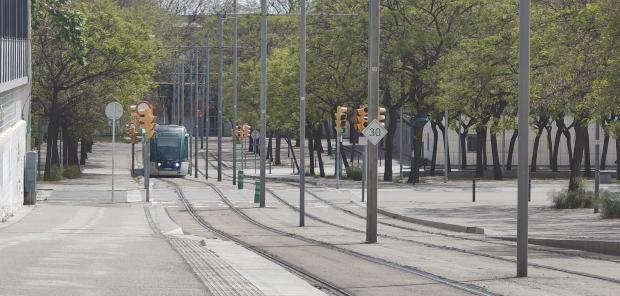
Like many cities, Barcelona started with a horse-drawn tram network, which then grew and was electrified before being decommissioned in favour of buses, private vehicles and the metro. Having not turned out so great, Barcelona then returned to the tram. I wrote about this same pattern in Luxembourg and Berlin, now it’s time for Barcelona.
The first tram network The horse-drawn tram A monument to Christopher Columbus was constructed in 1888 near the Drassanes shipyards.
Read more...
On 5 March 2025, the Dutch Railways (NS) presented a model of their interior for the Dubbeldekker Nieuwe Generatie (Double-Decker New Generation), or DDNG for short. This train will be introduced in 2029 to replace the ageing DDZ and provide additional capacity to intercity services.
I was going to write an overview of the DDNG and realised the train did not have an English Wikipedia page yet, so I created that instead. I’ll use this post to cover the most important details with my commentary.
Read more...